 GUIDE
GUIDE
How to Actually Plan Tomorrow, Not Just Hope For It
August 18, 2026 · 5 min read
GUIDE
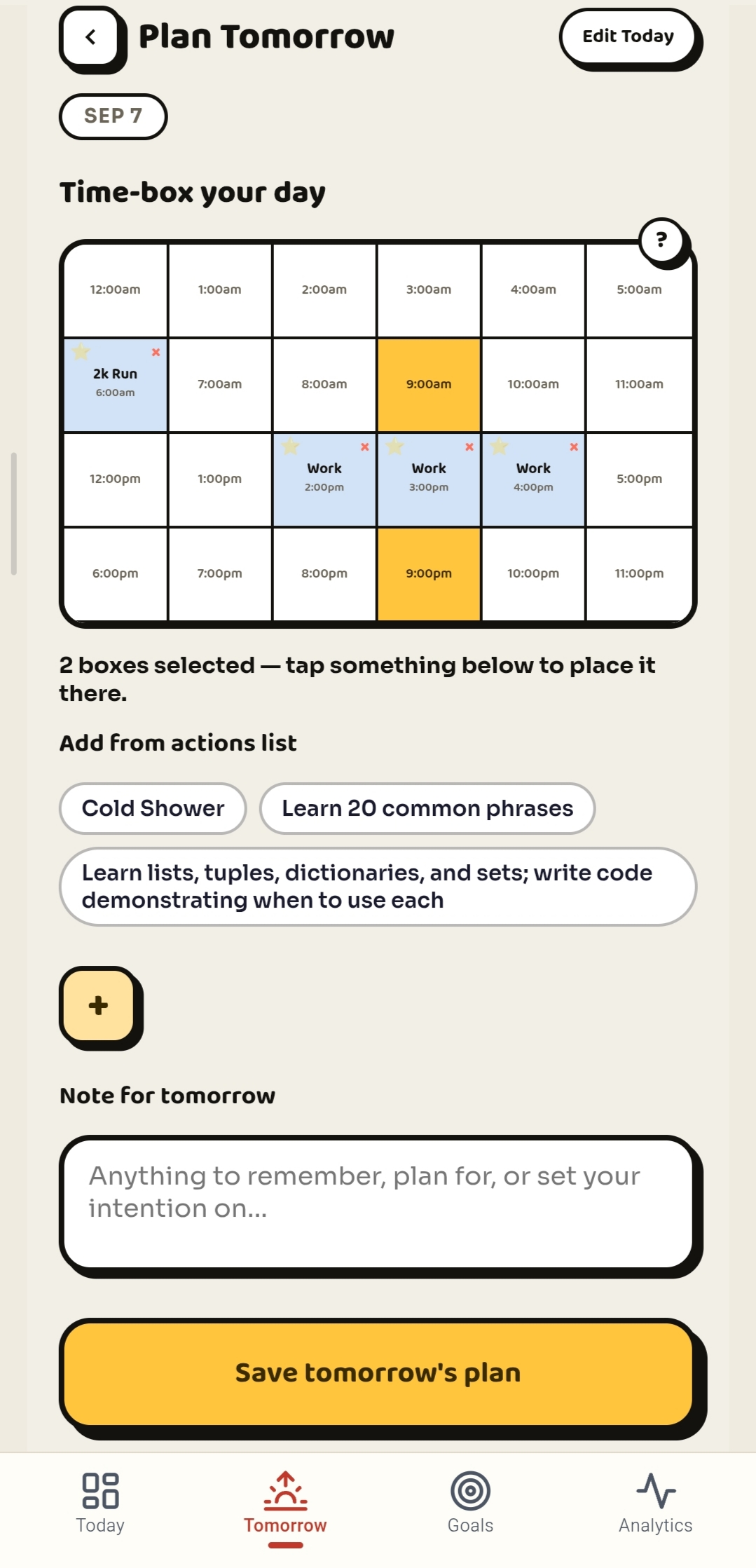
A to-do list tells you what needs to happen. It doesn't tell you when. And "when" is usually the actual reason something doesn't get done — not lack of intention, just no slot in the day that was ever really claimed.
Time-boxing fixes that by putting every action into an actual hour, before the day starts. It's a well-known productivity method for a reason: a task with a time attached to it gets treated differently by your brain than one floating on a list.
Habtix's Plan Tomorrow screen works with three kinds of actions, not one flat list:
Life Actions — your recurring habits (workout, reading, meditation). These get a "sticky" default time slot, so once you've placed one, it stays there until you deliberately move it.
Goal Actions — steps tied to a specific goal, with their own due dates. These get placed manually each time, since a one-off step doesn't have a "usual" hour the way a daily habit does.
Other Actions — anything else that needs a slot tomorrow but isn't part of a goal or a recurring habit.
Real days aren't neat 1-hour blocks. Plan Tomorrow's grid lets you split an hour into smaller pieces when you've got two short things to fit in, or merge two blocks into one when something needs more room. The plan bends to the actual day instead of forcing the day into a rigid template.
A to-do list answers "what." A calendar answers "when." Most habit trackers only give you the first one, and leave "when" to whatever's left over in your head at the moment — which is exactly the gap Procrastination and Erratic Rhythm live in. Planning tomorrow tonight, hour by hour, closes that gap before it opens.

Free forever plan · No credit card